

Components
Dairy farmers 'future proof’ their business with help from RIC loan
April 2026
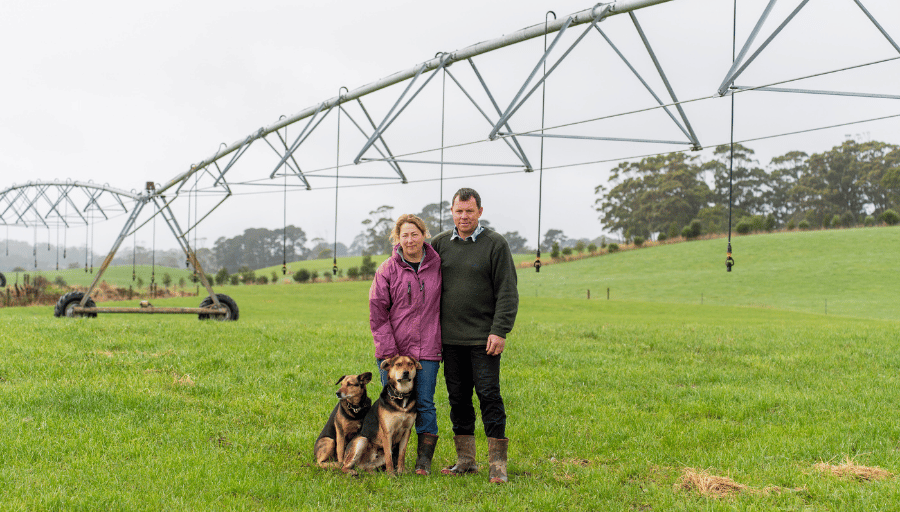
Freeing cash flow via a RIC loan has enabled Tasmanian dairy farmers to boost their access to fodder and recover faster from dry conditions.
Chris and Suzanne Cowley have been farming at Circular Head in Tasmania’s northwest since 1997 and at their property at Mengha since 2004.
They run 400 crossbred cattle on 138 hectares, producing 2 million litres of milk a year to supply a major cheese producer.
Dry conditions in northern Tasmania in 2017-19 reduced pasture growth and raised the cost of grain by 25 per cent. Poor milk prices added extra challenges and the Cowleys realised they needed additional water security to grow pasture to sustain their dairy herd.
“Some years it is a green drought – it looks green, but there's just no growth there and other years, there's just nothing there, it's just brown,” Suzanne said.
They found water on their property but struggled to secure commercial finance to develop it so they applied for a RIC Drought Loan in 2020 to extend their irrigation, on the advice of their bank manager.
They used their borrowings to refinance part of their commercial debt and were approved for additional funds for capital expenditure.
Thanks to RIC’s concessional interest rate and interest-only repayments in the first 5 years of the 10-year loan term, they were able to increase cash flow and invest in water infrastructure, including a new bore and pump.
The first phase of the irrigation project involved installing two pivots on previously dry land.
“And then the next phase was changing existing irrigation from K-line and laterals to pivot, so it was streamlining our operation, making it a lot more straightforward,” Suzanne said.
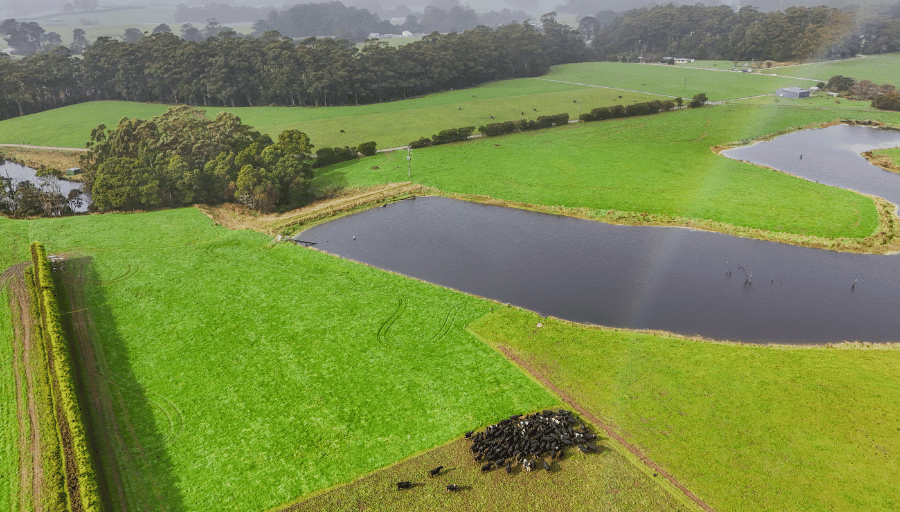
The investment boosted their irrigation capacity from 58 hectares to 90 hectares, increasing the amount of feed grown on-farm by 250 tonnes of dry matter a year.
The additional availability of feed reduced the reliance on bought-in feed, underpinned the herd’s overall fertility and condition, and boosted the volume of milk solids they produce by 25,000-30,000 kilograms a year.
“Milk solids are the fat and protein, so I think we used to sit somewhere around about 155,000 kilograms of solids a year and I think this year, we’re on track to do about 187,000 kilograms,” Suzanne said.
Moving to spring calving enabled the Cowleys to match their pasture growth to their herd’s peak milk production and the additional cash flow enabled them to buy another property to provide further fodder security.
“Since we've extended the irrigation, we haven't really looked back. It's been an absolute game changer for us,” Suzanne said.
With milk prices holding firm and cash flow eased, the Cowleys have been able to weather seasonal dry conditions, which have continued since they received the RIC loan.
“We still get dry down here - this summer has actually been really good, but the last two summers, I think the rain stopped in October, November, and we didn't get any good rain again until April, May,” Suzanne said.
“When you're milking cows, you just can't operate like that.
“Putting the irrigation in has basically guaranteed the production that we do for the year, so the budget that we set out, we pretty much know what we're going to do.
“In terms of the quantity and quality [of fodder], we know what the cows are getting.”
She said the RIC loan had given the couple greater confidence in their business.
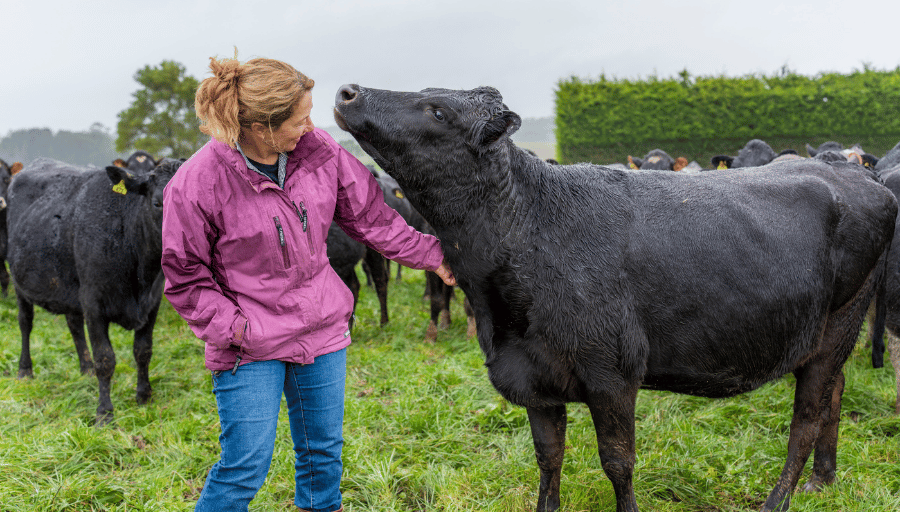
“I love the cows, I believe in what we do and I think we produce a really good product,” she said.
“The RIC loan gave us the breathing space to turn the dial to a more positive cash flow, we could pay the bills every month, I mean I hadn’t been able to do that prior to getting the RIC loan, it was always a battle.”
Her top tip for progressing a RIC loan application was having financial information on hand and simply, to “do it”.
“You really need to know your numbers but it’s also a good way to get your head around the numbers of your business,” she said.
“Have a go, to futureproof your business and look at opportunities for big projects that make your business sustainable.”
If you’re considering ways to manage through, recover from and prepare for drought, visit www.ric.gov.au/drought to learn more about eligibility and how to apply.