

Components
Making her own way to build farm business for next generation.
March 2026
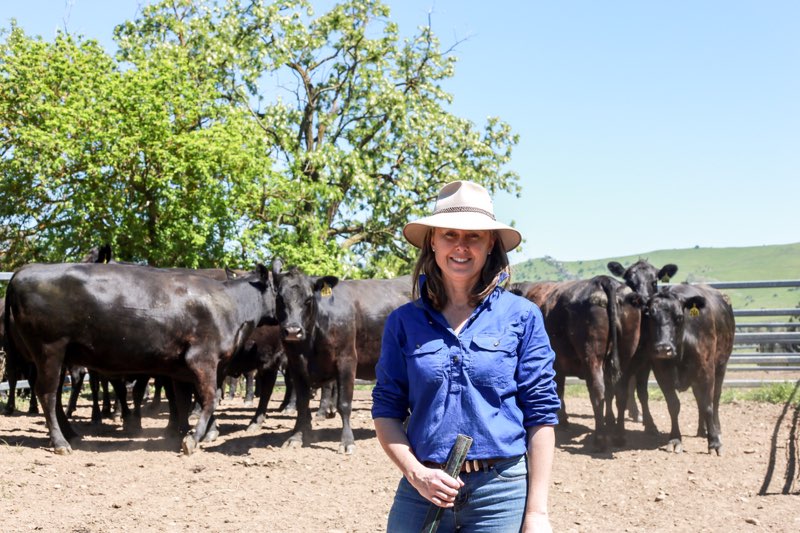
Cattle breeder thrives with RIC support
Operating as a sole trader in agriculture may be challenging, but one RIC customer says she wouldn’t have it any other way and loves life on the land.
Tracey Mulligan is a third-generation cattle farmer, who grew up on the property in Tooma with her parents and returned in 2010 to buy the operation, where she now lives with her 2 teenage sons.
She sells calves as weaners and particularly enjoys refining genetics and using low-stress handling techniques to produce quiet cattle.
“Then you have people buying them and saying, ‘let me know when you’ll have the next lot ready’ or ‘the heifers are beautiful, they’re so quiet – they’re in with their boyfriend now’ – I thrive on all of that,” she said.
Tracey said she liked being her own boss, even though it brought constraints on her financial freedom and time. She hoped her farm could stay in the family for the next generation.
“I got into farming with an absolute passion for cattle and love seeing new calves about, it makes my day,” she said.
“I’m determined to make sure that my 2 young boys also get a go at staying on the land and not have to reside in towns or cities – now that they’ve grown up a bit more that they’re also passionate about the land and would definitely like to have a go at running the operations themselves one day,” she said.
She applied for a Farm Investment Loan in late 2022, which supports farmers who have experienced at least 2 years of significant financial impact due to natural disaster, biosecurity events, market closures or cumulative impacts.
Tracey refinanced part of her commercial debt with RIC, which offered interest-only payments for the first 5 years at a low interest rate.
“For my situation, it was actually a bit of a godsend, I have to say,” Tracey said.
“Anything to reduce the abundant costs was a positive so it was in my best interests to follow it through – I was able to save something like $18,000-20,000 a year [in interest payments] and I’m now able to put that money toward a more viable use.
“Everyone from RIC was fabulous to deal with and they were very clear on any steps I might have had to take to get things through – the application was straightforward, it was just the time of getting it all together, but the reward was there.”
Tracey used the cash flow to build her herd and by moving to split calving, where part of the herd calves in autumn and the other in spring, she has boosted productivity and bull efficiency and now runs almost 550 cows and calves.
With recent dry conditions in her area following a crash in cattle prices in 2024, she said having the RIC loan had put her in a better position to manage the additional challenge of buying feed.
She has also increased her water infrastructure with new trough placements, bore lines and pumps.
“The situation wasn’t quite as bad as it could have been if I didn’t have the RIC loan,” she said.
“I would have been paying more in interest and that all adds up.
“It meant that I didn’t have to go out and work off farm, it meant that I could put 100 per cent of my labour hours into maintaining the farm and trying to keep it as profitable and as viable as it can potentially be.”
Tracey intends to continue building her business and hopes she can structure it to be able to spend more leisure time with her sons.
“As a sole trader, you’re essentially it – if you’re not here, things can go downhill very quickly, there might be a calving issue or there’s something strung up in a fence or the troughs are broken or the dam’s leaking, you just have to be here,” she said.
As a female business owner in agriculture, she said she was seeing more women entering the industry, which she saw as very positive.
“The fellas need us and we need them – it requires a real team effort to be successful,” she said.
“You’ve definitely got to have nerves of steel and the right mindset – there is a constant stream of headaches to overcome such as drought, floods or price crashes to name a few.
“Resilience is paramount – us females haven’t always got the physical horsepower but we’re pretty imaginative and can generally find a way to complete the task at hand.
“You do what you have to do, when you have to do it.”
If you would like to learn more about eligibility criteria, please visit ric.gov.au/before-apply where you’ll find tools and guides to help you discover if a RIC loan could help your farm business.